The Nighttime Parking Lot Incident at the School
I'm Thinking of Ending ThingsThe Nighttime Parking Lot Incident at the School turns an isolated stop on a winter drive into a confrontation over what can—and cannot—be seen. At a massive, dark Rural High School, Jake goes out with the couple’s cups and returns from behind the building with snow on him. Later, while Jake and the narrator are close inside the car, he suddenly shields the narrator and insists that a man at a window had been watching them. The narrator looks and sees nobody. The incident’s decisive threat is therefore also its unresolved fact: Jake is certain of a watcher, while the narrator can confirm only that the windows offered someone a clear view of the car.
The remote school
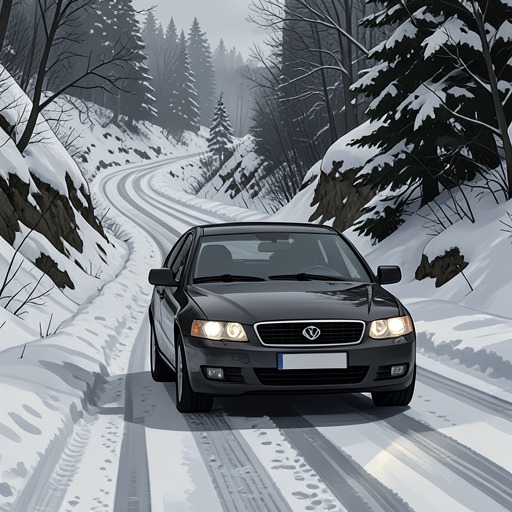
The school appears after a long drive along a narrow country road. The narrator recognizes it as a huge old rural high school and estimates that perhaps two thousand students attend, while acknowledging that the actual student body is unknown. Its scale contrasts with its setting: the road is long and narrow, the surrounding country dark, and there are no houses nearby. The narrator had expected something else and is surprised by the building’s size.
The approach gives way to a close, limited view of the car’s surroundings. Near a bank of windows stand a bike rack with a single-gear bicycle locked to it and a green garbage bin. There are no streetlights on the back road; the school’s single yellow roof flood is the only light the narrator identifies. The building may be large, but at night its illuminated windows and the darkness around them make the immediate scene difficult to read.
Jake leaves the car
Jake says he will be right back and gets out carrying both cups in one hand. The narrator watches him walk past the bicycle rack toward the bin, recognizing his familiar pigeon-toed gait, stooped shoulders, bent head, and long, slow strides. In the cold, his posture might be mistaken for a reaction to the weather, but the narrator regards it as distinctly his. That intimate recognition sits against the uncertainty of what he is doing outside.
Through the windshield, the narrator watches the wipers move with a motorized friction sound and sees Jake lift the bin’s lid. He looks inside but does not throw the cups away. Instead, he looks back at the car, shrugs, replaces the lid, and walks away from it, around the side of the school. The narrator cannot see where he has gone and wonders why he did not discard the cups.
Jake returns red-faced, with snow on his shoulders and head. Before he does, the narrator has opened the glove box and found it crowded with balled-up tissues, one marked with something red, as well as a pencil, a notepad, photographs, and discarded candy wrappers. Jake catches the narrator at the open glove box and asks what is happening. The narrator says they were waiting for him; Jake explains that the bin was filled with road salt, not garbage, and that he went farther looking for a Dumpster. Behind the building, he found a huge field that seemed to continue without end, with nothing visible beyond it. The detour explains his absence without making the place feel less unsettling to the narrator.
A watcher at the window
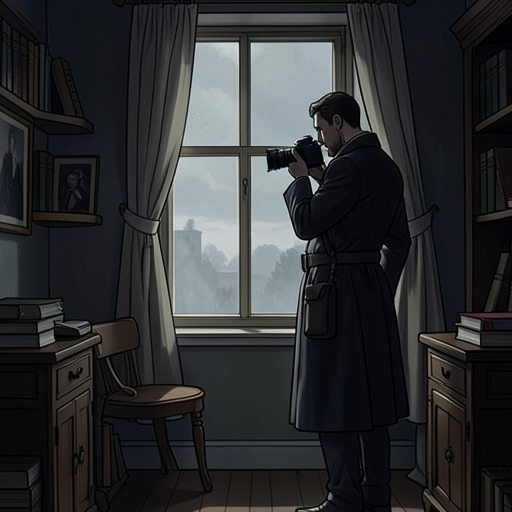
Later, as Jake kisses the narrator’s chest, he abruptly recoils, leans across the narrator, and clears condensation from the window with his hand. His movement changes the car from a private space into one exposed to the school. He tells the narrator to sit up and get dressed because someone in the school can see them. The narrator is initially confused and cannot find a shirt lying on the floor, while Jake repeats that a man was standing at a window, motionless, looking directly at the car.
The scene’s evidence is sharply divided. Jake says he saw a man and describes him as staring at and enjoying the sight of the couple. The narrator turns toward the windows Jake indicates but sees no one. The narrator nevertheless recognizes that a person at that window could easily have seen inside the car. The man’s absence from the narrator’s view does not disprove Jake’s account, but it prevents the encounter from becoming a jointly verified sighting.
The cold becomes noticeable once the car’s engine is off, and the narrator finds the shirt and puts it on before reaching for a coat. These practical gestures follow the sudden exposure of their intimacy: Jake’s warning interrupts the couple, and getting dressed becomes an immediate response to the possibility that an unknown person has been watching. The school is not merely a distant backdrop now; its windows have become the boundary across which their privacy may have been breached.
Disagreement and unresolved threat
The narrator tries to calm Jake by suggesting that the watcher might be a bored old janitor who has not seen anyone out there so late. This is offered as a possible explanation, not as something the narrator has seen or confirmed. Jake rejects it angrily. In his account, the man was not checking whether they were all right or idly looking out; he was leering at them. His insistence makes the encounter a disagreement about the meaning of the same unverified presence: the narrator reaches for an ordinary possibility, while Jake describes deliberate, invasive attention.
The episode does not establish who, if anyone, stood at the window, nor does the narrator witness the figure. Its tension comes from the gap between a plausible sightline and an unverifiable observer. Earlier, the narrator could identify Jake from his walk and see the details of his brief excursion; at the school window, visual access no longer produces shared certainty. A man may have watched them, but only Jake claims to have seen him. The stop consequently alters the car’s meaning—from a place to wait and seek shelter on the road to a space whose privacy cannot be trusted—without resolving whether the threat was real.